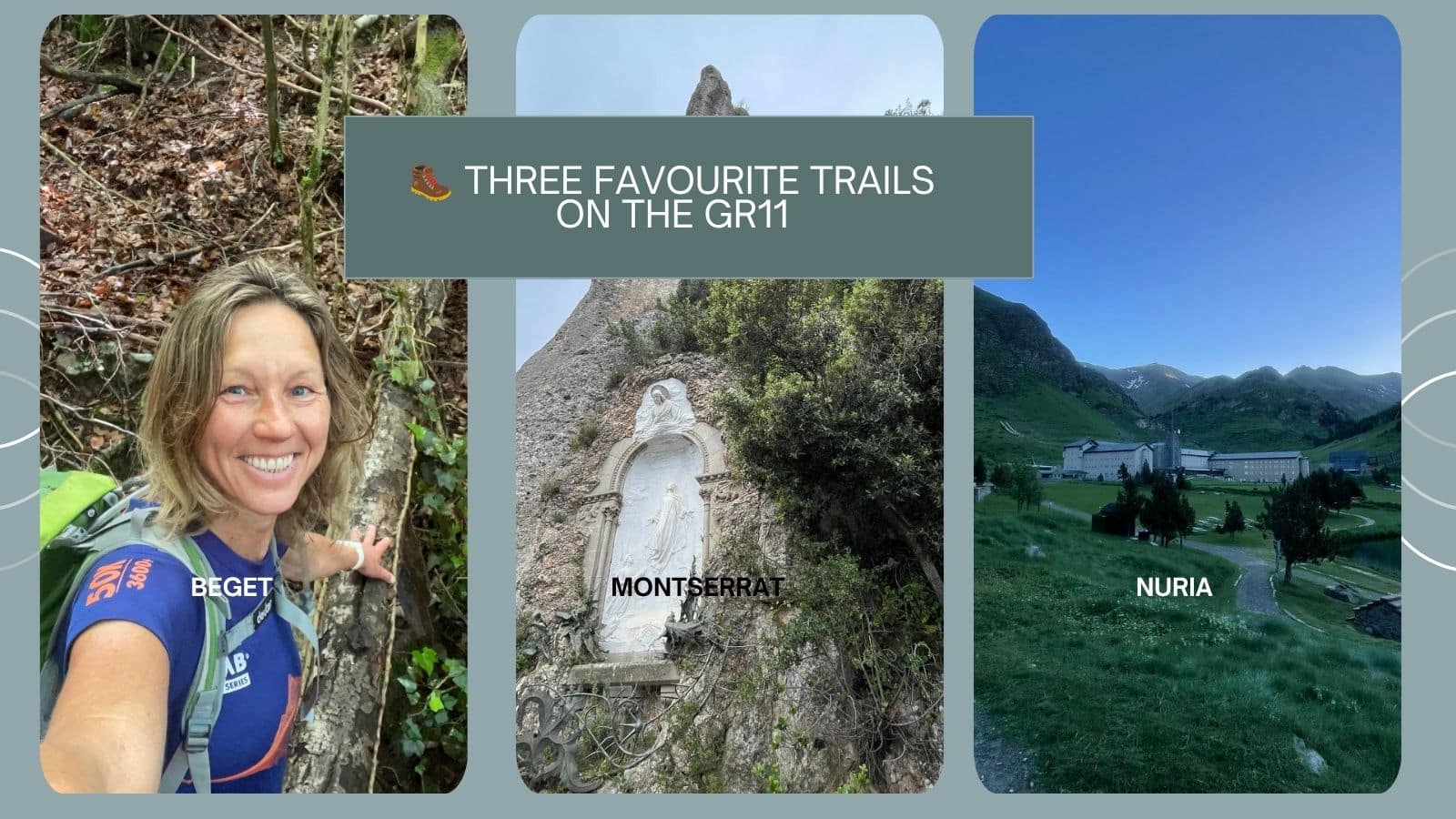
Three Favourite Days on the Trail (So Far). People ask me all the time, which hike was the best. As if there’s one answer. As if 400 kilometres across the Pyrenees, or a lifetime of mountains before that, could be reduced to a single ranking. It can’t, although I give it a shot.
There isn’t one best day. There are more than a few that stayed with me during the hike so far. Not because they were the hardest, the most beautiful or the most photographed, but because of what happened in me while I was walking them.
I. Through the Window, Between the Cows, Over the Snow: Refugi Ull de Ter to Santuaria de Núria
High, open ridge line above 2,000 metres, bare rock and late lying snow patches. I was presented with views on the lakes down, snow patches and the green trough of the Núria valley hidden from view until I almost was on top of it. The climb is long, followed by a spectaculair climb over the ridge with some cows blocking the trail at the start. The valley appears below you all at once, the way a curtain lifts. This hike is the one that starts with me climbing out of a hostel window in Setcases (lovely cute village with nowadays a bit more as seven houses) before the sun is out. The main door was locked and I didn’t want to wait for anyone to unlock it. Highest point is the pass of the nine crosses: Coll de Noucreus, to remind the 9 people who froze here to death. It’s a sober reminder of the power and very quickly change of high mountain weather “El Torp”.
You don’t have to earn Núria by train. You can earn it by foot. Which is absolutely worth it. I stayed the night in Nuria which I always would recommend. Take it easy, and hike down to Queralbs next day before heading back to Barcelona.
Here’s how 👇
📍 Start: Setcases or Refugi Ull de Ter. Train Barcelona → Ripoll (R3, ~2h), then regional bus to Camprodon/Setcases. 🥾 Route: mostly on foot from the village itself, up the Ter valley to Refugi Ull de Ter, then over Coll de la Marrana and Coll de Noucreus to Núria. The quiet high ridge, not a shortcut from a car park. 📏 ~20km, ~1,700m elevation gain / 1,000m descent. Figure 6:40–7:15 hours. Above 2,000m most of the day and that’s why proper boots, poles, and more water than you think.🚂 Cremallera de Núria down to Queralbs or Ribes de Freser, train back to Barcelona. 🚗 If you’re driving: there’s no way to loop back. Núria has no road access at all, so a car left in Setcases can’t be retrieved from the other end. You’ll need either two cars (one left at Ribes/Queralbs, drive the other to carpark nearby Refugi Ull de Ter) or a taxi covering the ~90km back to Refugi once you’re down. 🌙 Even better: stay the night in Núria. Skip the car question entirely, arrive by train and on foot, and let the mountain empty out around you before the day-trippers arrive the next morning. 📅 Best season: June – October. Start early in the day, but not in the season since there might be snow. The ridge before the first cremallera brings the crowds up is the whole point of walking it.
II. GR11 through the Alta Garrotxa. The wildest, loneliest stretch of the whole trail.
Past a ruined 9th-century monastery, along a cliff-edge pass, down into one of Catalonia’s most beautiful hidden villages. And that’s exactly the point. No villages for hours, no signal, barely another soul or any sign post. You pass the ruins of a 9th century monastery at Sant Aniol d’Aguja, cross a narrow pass cut into a cliff face at Salt de la Núvia, and climb over the Talaixà col, where a free, always-open refuge sits waiting for whoever needs it. Then the trail drops, and Beget appears: one of the most beautiful villages in the Catalan Pyrenees, stone bridges, a Romanesque church, a swimming hole cut into the river right where you need it most. I did this all in one day, 34km which is quite a stretch. A wonderful one, though.
Here’s how 👇
📍 Start: Albanyà, reachable by TEISA bus from Figueres or Girona. 📏 ~34km, 1,850 and 1.580 descending. Figure 8–10+ hours. Water is scarce for long stretches, especially past Sant Aniol. Carry more than feels necessary. 🌙 Stay the night in Beget. After hours of nobody, the village feels like a reward that was earned, not just arrived at. 🚌 Getting back: no same day return. From Beget, a small on demand bus (book ahead) runs to Camprodon, or you can walk, then a direct line continues to Barcelona via Ripoll and Vic. 📅 Best season: spring or autumn. This stretch is exposed, and summer heat plus scarce water makes it much harder than the distance alone suggests.
III. The quiet way to Montserrat: Olesa de Montserrat to the Black Madonna
Not on the GR11, but adjacent and part of Camino Catalan / Maresme
Everyone who visits Montserrat walks the same route: up through Sant Joan, past Sant Jeroni, the postcard version. It’s beautiful. It’s also full of people. Although the landscape remains surprising and impressive, and surely not what you expect with the unique, saw-like jagged peaks.
This route isn’t packed. Same mountain, same Black Madonna at the end, but you arrive from the other side, on foot, from a town most visitors have never heard of.
I did this one as a group, weekend III of our ongoing “Camino Catalan weekend” series with International friends and hike lovers. Somehow I ended up Camino trip leader. Sorting trains and pace and everyone’s nerves (one of us sat waiting at the station an hour early, just in case). Funny how many people need someone else to just… decide and go.
17km and 900m of climbing later, we walked into Montserrat as the last tour buses were leaving. Slipped in to see the Black Madonna right before the church closed. And then, the square emptied. The church emptied. For a few minutes, the whole mountain was just ours.
Here’s how 👇
📍 Start hiking: Olesa de Montserrat. R5 Rodalies train from Barcelona Plaça Espanya, ~50–60 min. 🥾 Route: mostly along the GR6, past Esparreguera and Collbató, up to the Montserrat monastery: the quiet approach, not the busy one. 📏 ~17km, ~900m elevation gain. Figure 6–7 hours, more with a group. Bring more water than you think. 🚂 Day trip: walk up, take the Cremallera rack railway down to Monistrol-Villanova, R5 back to Barcelona. 🌙 Even better: stay the night at the monastery. Arrive as the crowds leave, have the mountain to yourself till the next wave of buses shows up next morning. 📅 Best season: spring and autumn for comfortable climbing. This exposed approach gets hot fast in summer, so start early if it’s July or August.
Same destination everyone posts about. A completely different way of arriving at it.