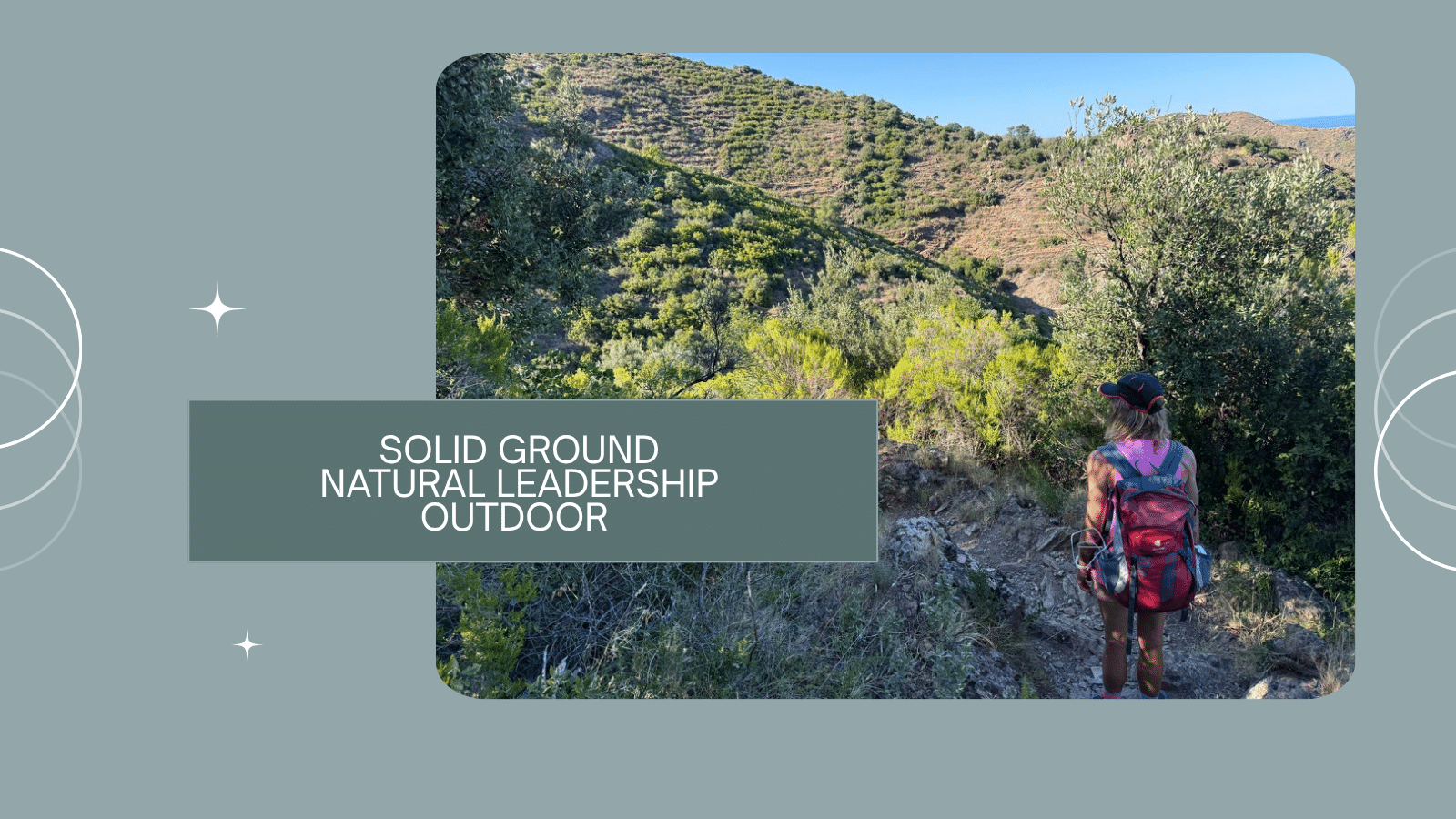
You did the leadership training. Your nervous system hasn’t. What no meeting room can teach a leader.
Earlier in the year, I wrote about what is happening to leadership in pharma. And although, things seems to slow down, change is no longer something rare. It has become the new operating context. The continuous restructurings save money on paper, and moves quietly the cost to the people who remain. They need to perform non stop. Silent burnout. Senior leaders functioning at 75% of their capacity. And looking fine. Disengagement on the rise.
The clarity, energy and judgment you need to have to make good decisions, drains under sustained pressure. This only comes back through recovery. Real recovery. Continuous recovery. Not through a weekend off, but through a nervous system that knows how to switch back.
The new operating models make that harder. Less hierarchy. Faster decisions. Ownership pushed closer to the work. Plans in 90-day cycles. Recovery is squeezed somewhere in the middle. Eroding slowly your leadership capacity.
On paper, that is progress. In practice, it means more people making more decisions, faster, with fewer managers to lean on. Carrying the outcome personally. In a permanent sprint rhythm with no built-in recovery. More decisions under uncertainty, with less information and more at stake. And then you need to take ownership of results while the structure moves.
So where do you rebuild leadership capacity in all of this? Where do you, as a leader find solid ground when the ground keeps moving?
You can’t lead what you can’t read
In 25 years in pharma, I did my share of leadership training. As a participant. As a mentor. As a trainer. As a manager who needed to grow to the next level I learned a lot. I became good at many things. Reading markets. Leading teams. Delivering under pressure.
What I was not good at was reading myself. Noticing what was happening inside me. And admitting and acting to it.
Looking back, that is no surprise. Most leadership programs happen indoors. Models. Frameworks. 360 feedback. Another change curve. Useful. And all of it works on what leaders know.
What determines how a leader shows up under pressure sits deeper. In the state of their nervous system. In how well they recognize their own patterns when the stakes rise.
This matters even more in a flatter organization. When you lead without the title, through influence instead of command, your composure is your authority.
Self-awareness is where most managers struggle. Not because they lack intelligence. Because they never get the space to see themselves clearly.
The research agrees. Organizational psychologist Tasha Eurich found that 95% of people believe they are self-aware. Her estimate of how many actually are: 10 to 15%. And the more senior the leader, the less self-aware they tend to become.
That gap is expensive. In a Cornell study of 72 senior executives, self-awareness was the strongest predictor of overall success.
I found that space later. Outside.
What nature does that a training room can’t
This autumn I started my training as an EWES Outdoor Wilderness Guide. After I have been certified as Wim Hof Method instructor, working with the cold to learn and work with your automatic stress response, and Oxygen Advantage Advanced Master instructor with the breath as solid foundation.
The training is all about Navigation. Risk management. Outdoor first aid. Group leadership. And a full week outside with a limited backpack, where the task is simple: take care of yourself and your group with what you carry.
I expected to learn techniques. I didn’t expect to learn this much about leadership.
Nature doesn’t care if you are cold, hungry or tired. It doesn’t care about your title. It doesn’t care whether you like it or not. You adapt. Or you struggle.
There is no one to impress on a mountain. No slide deck to stand behind. No calendar to hide in. What remains is how you really respond to uncertainty, to discomfort, to a plan that falls apart.
Nature isn’t transformative. It scraps away the masks you normally hide behind.
And the uncertainty is not a simulation. The weather turns. The route is blocked. The group is slower than planned. You take smart risks with less information and more at stake. Exactly what a reorganization demands. Except here, you feel it in your body.
In the outdoor, you learn quickly that solid ground is not where you stand. It is what you carry inside you.
What the science shows
Because of my background, I care about the scientific evidence. What do studies say about what I felt already.
- It doesn’t take long. In a University of Michigan study, urban dwellers took a “nature pill” of at least 10 minutes, three times a week, for eight weeks. No phone, no conversation, no reading. Their cortisol dropped beyond its normal daily decline, and the effect was most efficient between 20 and 30 minutes. Twenty minutes. Most leaders spend longer than that waiting for a meeting to start.
- The nervous system shifts. In field experiments across 24 forests in Japan, 280 participants walked in and viewed either a forest or a city area, then switched the next day as a cross-check. Forest environments led to lower cortisol, lower pulse rate, lower blood pressure, more parasympathetic activity and less sympathetic activity than city environments. That is the same autonomic shift I measure with HRV in my work with leaders. It is what recovery looks like in the body.
- The mental replay quiets down. In a Stanford study, a 90-minute walk in a natural setting reduced both self-reported rumination and activity in the subgenual prefrontal cortex, while a 90-minute walk in an urban setting showed no such effects. Rumination is the 2 a.m. replay of the meeting that went wrong. Most leaders know it well.
- Thinking opens up. Four days of immersion in nature, disconnected from technology, increased performance on a creative problem-solving task by 50% in a group of hikers. The researchers are honest that they could not determine whether the effect came from more nature, less technology, or other factors. For leaders, I would argue both are the point.
Every organization says it wants creativity, curiosity and resilience. Curiosity needs a calm brain, focus and attention. A brain under threat stops exploring.
What cold taught me about my stress response
Before the mountains, there was the cold training. When I trained as a Wim Hof Method instructor, I expected to learn about ice and breathing. What I learned was about leadership and so applicable in daily life. The first seconds in cold water are pure automatic stress response. Gasping. Racing heart. Every cell shouting: “get out”. My innate stress response.
I couldn’t think that immediate response away. But you can meet it. With focus. With attention. With your breath. And then something changes. The cold is still cold. But you are no longer controlled by it.
That is the insight most leaders never get in a meeting room: you can feel your own stress response happen in real time. You see how fast it takes over. And you discover that you have more choice in it than you thought.
Also here, the science supports this. In a study published in PNAS, people trained in breathing, cold exposure and meditation were able to voluntarily influence their autonomic nervous system and immune response, something long considered impossible.
The cold is not the point. It is the mirror. It teaches you urgency without panic. And that is exactly what a culture that pursues everything with urgency needs from its leaders.
Two days in the pouring rain
Some years ago (present for my 50th birthday with my best friend) I joined a two-day Shinrin-yoku, forest bathing, workshop in the Netherlands. Two full days of pouring rain.
I expected to come home cold, wet and irritated. I came home clearer and happier than I had felt in a long time. (Good rain gear helped, evidently.)
Shinrin-yoku is not a hike. There is no goal, no distance, no pace. You slow down and take in the forest through all five senses.
Sight. Leaves moving, light changing, water running. Nature captures your attention without effort. Researchers call it soft fascination. No mental energy required, so the part of your brain you use for focused work all day can finally rest and recharge.
Sound. Rain on leaves, wind, birds. And above all, what is missing: no notifications, no traffic, no one asking for a decision. In lab studies, people recover faster from stress when they hear nature sounds than when they hear city noise.
Smell. The forest after rain has its own chemistry. Trees release aromatic compounds called phytoncides, and Japanese studies link forest time to lower stress hormones and higher activity of immune cells. Promising, though the studies are still small.
Touch. Bark, moss, cold water, a stone in your hand. Touch pulls your attention out of your head and back into your body. The same shift I train with breath.
Taste. We ended with tea from forest herbs. Less about physiology, more about ritual. A clear moment to slow down before returning to daily life.
No single sense does the work. It is the combination: slowing down, switching off, and letting every sense take in where you are.
That is what a leader’s brain rarely gets: rest without switching off.
Lessons from the trail that translate directly into leadership
- The map is not the terrain. In navigation, the first question is never “where am I going?” It is “where am I now?” You cannot plot a route from a place you haven’t located. Many leaders know their target and their deadline, and have no honest picture of where they stand. Their energy. Their stress load. Their blind spots.
- Fixed before, dynamic during. In the mountains, you plan carefully. Then you walk, knowing the plan will change. A day can start with a clear blue sky and turn within an hour. Prepare thoroughly, then let go of what you cannot control. Perfectionism is not a safety strategy. It is a stress strategy.
- You always have 30 seconds. The first thing we learned in our survival simulations: whatever happens, you always have 30 seconds to stop. Then you make an inventarisation: what do we have, who is hurt, what is the risk? You make a plan. You divide the work. And then you go. Stop. Inventory. Plan. Divide. Go.
- It sounds obvious. Under pressure, almost nobody does it. The automatic stress response wants action, now. The leaders who stay clear in a crisis are not the fastest. They are the ones who protect those 30 seconds. A reset before the decision, not after it. And a slow exhale is how you get them: a direct signal to your nervous system that brings your thinking brain back online.
- Learning takes longer than we think. One week to learn a skill. One month to learn when to use it. One year to learn when not to use it. Leadership programs usually stop after week one.
Igniting the human and natural side of leadership
This is where my work is going.
Most organizations already have wellbeing programs, mindfulness apps and mental health first aiders. Perfect. My contribution is something else. Not a wellness retreat. Not a team-building day with a hike added on.
Leadership performance through change. A leadership trajectory where Nature is the classroom. Built on 25 years in global pharma, Functional breathing and HRV measurement, Cold exposure, NLP coaching, and my training as a wilderness guide.
Navigation to answer the question: where are you, really? Breathwork before the climb, so you learn what your system does under load. Cold exposure, to meet your automatic stress response and learn to lead it. Reflection on the trail, side by side, because people say different things when they walk than when they sit across a table. A silent sit spot to look beyond the next quarter.
Uncertain terrain. Real decisions. A safe container. And objective measurement before and after, so you don’t just feel differently. You see it.
Psychological safety is not only a culture goal. A calm nervous system is its physical side. Leaders who can regulate themselves create teams that dare to challenge, speak up and think. And they recover fast enough that each new cycle starts fresh, not depleted.
An invitation
If this year has asked more of you than you have shown on the outside, there are two ways to start.
- Your personal and individual reset. One-to-one, combining breath, cold, nervous system regulation and time outside. On the trails nearby Barcelona, or virtually to begin.
- Walk with me in 2027. I am designing small-group leadership hikes in the mountains of Catalonia for next year. For leaders doing more with fewer people, who want to stay sharp without burning out. If you want to be part of the first groups, send me a message. Places will be limited.
Capacity isn’t rebuilt by pushing harder. Solid ground is found by stepping outside long enough to remember who you are when nobody is watching.